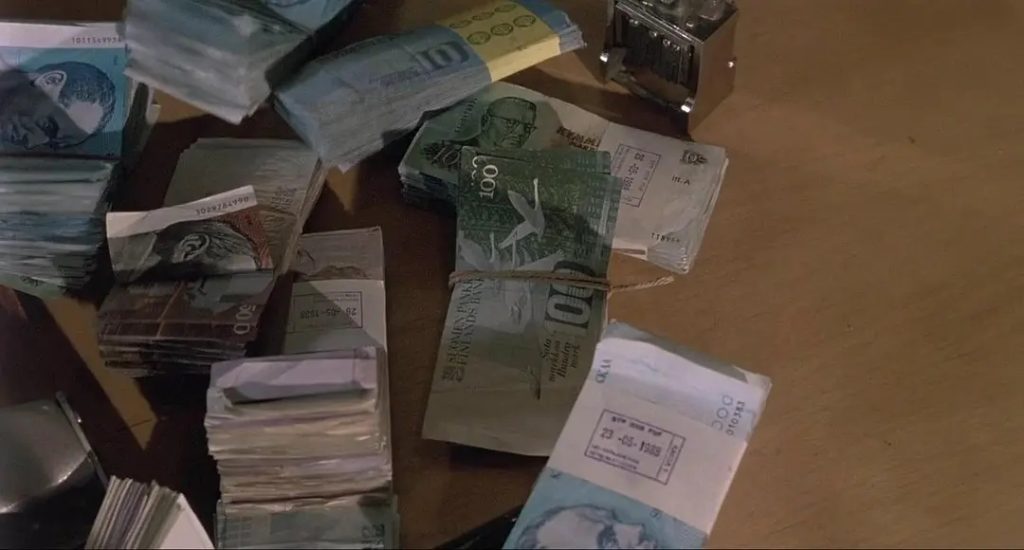
影片延续了电影《偷自行车的人》,相似的剧情和场面调度中摄像机所在位置拍摄的唯美空镜头,剧情它是证明,场面调度它是衍生,好像这种衍生它是一种艺术感觉,即什么情况下“感觉”会出现唯美的画面,但需要摄像的人拥有很强的构图平衡的素质。男主卡塞林是一名工人,他偶然间获得了朋友的资产,那位朋友可能对生活充斥着绝望,但电影没有给出他自杀的具体画面。从这里,道具箱子上印着卡西普、汤和现金,这表明不管是在犯罪的角度上,还是虚无镖缈的世界之中,思考之间,做的错误决定可能是永久性的,好比被通缉,一辈子都只能躲躲藏藏,又或者蹲到刑满释放。影片可以说是讲述犯罪的影片,它和电影《偷自行车的人》共同表述过小偷的防御机制,当主角们想找到小偷时,方法可能是他们在大脑中沟通要在现实中碰到小偷,一样的结果,都是安排了看着感觉是相似的面孔,但实际上样貌天差地别,并且都有自己的立场。卡塞林是通过这样的途径攻击误认为遇到的陌生人是小偷被判服刑,说回被偷与偷的角色转换,他用的打火机变过两次,从火柴变成打火机,他到底是偷的还是捡到的就不为人知了,但比较有意思的是有几个画面刻画出他不知道怎么用拿来的打火机,比较的笨拙同他不知道朋友送他的跑车怎么关闭软顶。说回监狱,主角卡塞林遇到狱友后看着又感觉眼熟,像偷他钱的人,但是狱友也内心躲闪,带上了眼镜可能样貌相像吧。他们随后配合着越狱了,找人制作证件和货轮离开。这里的剧情算是对《偷自行车的人》的补充,是对进监狱后剧情的刻画,虽然在里奇的年代,地区贫困使他不像本片一样有很多渠道去搞到钱和安排事情,但这也算是另一版不同类别的剧情的补充。两部影片剧情都表现的很残酷和冷漠,是主角们被偷时的社会风貌表现,是他们人生中灾难性时刻的遭遇展现。
The film continues from the movie “The Bicycle Thief”, with a similar plot and beautiful aerial shots shot at the camera’s location in the scene scheduling. The plot serves as proof, while the scene scheduling is derivative, as if this derivative is an artistic feeling, that is, under what circumstances “feelings” will produce beautiful images, but the photographer needs to have strong compositional balance. The male protagonist Kasserin is a worker who accidentally obtains assets from a friend who may be filled with despair about life, but the movie does not provide specific footage of his suicide. From here, the prop box is printed with Cassip, soup, and cash, indicating that whether from a criminal perspective or in a world of nothingness, wrong decisions made between thoughts may be permanent, like being wanted and having to hide for a lifetime, or squatting until the end of their sentence and release. The film can be said to be a crime film, which, together with the movie “The Bicycle Thief”, expresses the defense mechanism of thieves. When the protagonists want to find the thief, their method may be to communicate in their brains to encounter the thief in real life. The same result is that they arrange faces that look similar to each other, but in reality, their appearances are vastly different and they all have their own positions. Casselin was sentenced to prison for attacking a stranger he mistook for a thief through this method. When it comes to the role transition between theft and robbery, the lighter he used changed twice, from a match to a lighter. It is unknown whether he stole it or found it. However, what is more interesting is that there are several scenes depicting him not knowing how to use the lighter he received, which is clumsy and not knowing how to close the soft top of a sports car that his friend gave him. Speaking of the prison, the protagonist Kasserin looked familiar to his fellow inmates, like someone who stole his money. However, his fellow inmates also avoided him in their hearts, perhaps wearing glasses and looking alike. They then cooperated with the escape, finding someone to make documents and the cargo ship to leave. The plot here can be considered as a supplement to ‘The Bicycle Thief’, depicting the plot after being imprisoned. Although in Ritchie’s era, regional poverty did not provide him with many channels to obtain money and arrange things like in this film, it can also be considered as a supplement to a different type of plot. The plot of both films is portrayed as cruel and indifferent, depicting the social atmosphere of the protagonists when they were stolen, and showcasing their experiences during catastrophic moments in their lives.
wrivztyxixpzxzitixxkxemovxfpwe
tsuqthixektwhywgdnnlvnefingdoq